Healthy French Toast: A Flavorful Delight
Introduction
Looking for a quick, tasty breakfast that fuels your day? This healthy french toast recipe delivers flavor without the guilt. It’s perfect for busy mornings, families, and anyone craving a healthy breakfast. The simple ingredient list keeps it easy healthy french toast you can prepare in under 30 minutes.
Why Choose This Recipe?
Traditional French toast often relies on white bread, butter, and refined sugar. By swapping those for whole grain bread, almond milk, and natural sweeteners, you keep the dish dairy free french toast friendly and lower in empty calories. The protein from eggs supports muscle repair, while the fiber in whole wheat bread helps steady blood sugar.
Because the recipe uses a modest amount of coconut oil, you still get a satisfying crisp without excess saturated fat. The optional orange zest adds a burst of vitamin C that enhances iron absorption from the eggs.
Ingredients List
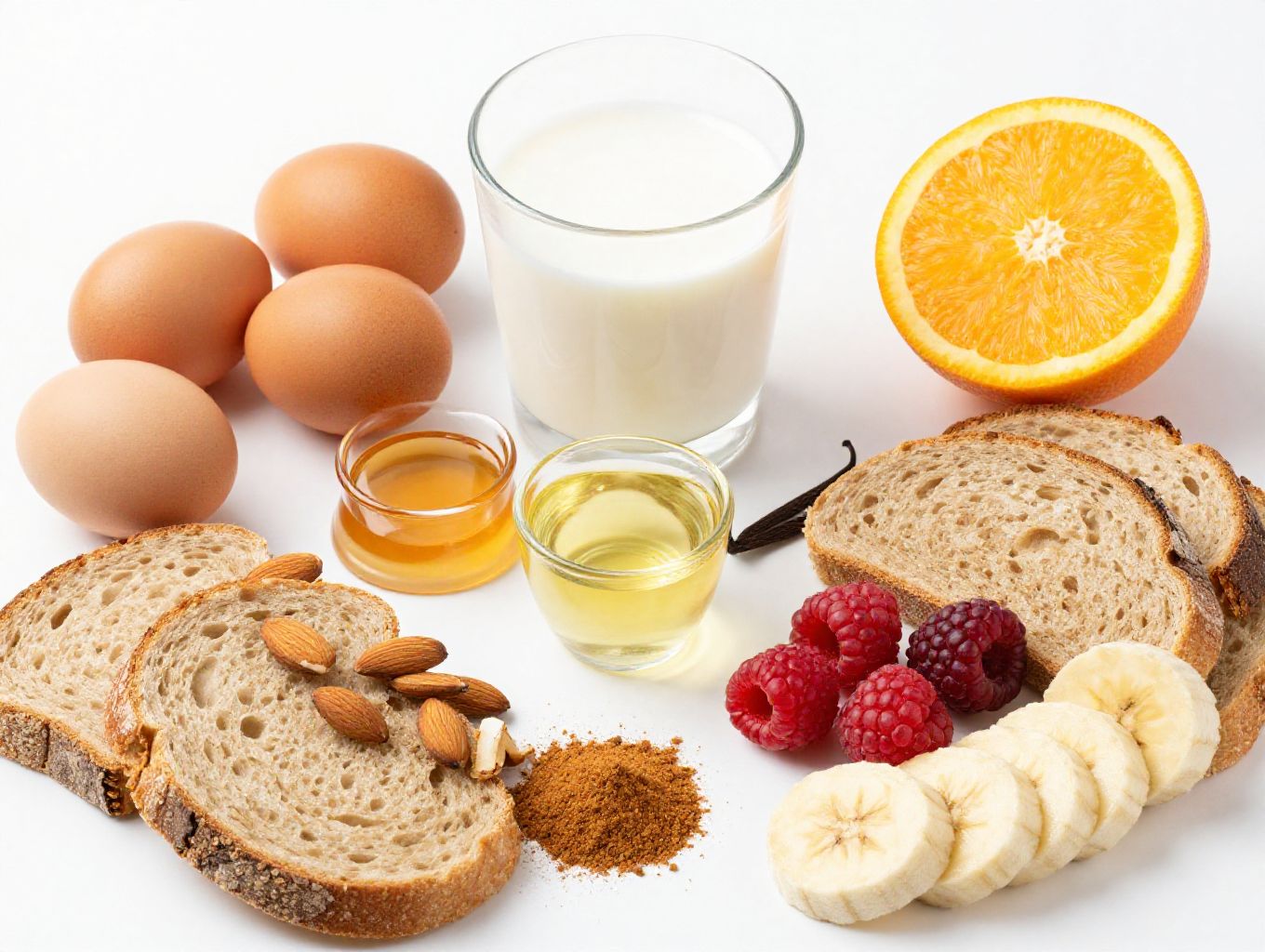
- 6 large eggs – provides high‑quality protein and essential amino acids.
- 1 cup unsweetened almond milk – keeps the dish dairy‑free and reduces calories.
- 2 tbsp pure maple syrup – adds natural sweetness and minerals like manganese.
- 1 tbsp coconut oil – contributes medium‑chain triglycerides that are quickly used for energy.
- 1 tsp vanilla extract – enhances aroma without added sugar.
- ½ tbsp ground cinnamon – offers antioxidants and a warm spice note.
- 8 slices whole wheat sourdough bread or sprouted grain bread – supplies fiber, B‑vitamins, and a pleasant chew.
- Optional: zest of 1 orange – brightens flavor and provides a dose of vitamin C.
- Toppings: fresh berries, sliced banana, maple syrup – customizable for extra vitamins, potassium, and taste.
For a gluten‑free version, swap the sourdough with certified gluten‑free bread. If you prefer a lower‑fat option, replace coconut oil with a light cooking spray.
Timing
- Prep Time: 10 min
- Cook Time: 15 min
- Total Time: 25 min
Step‑by‑Step Instructions
Step 1: Mix the batter
In a mixing bowl, whisk together the eggs, almond milk, maple syrup, coconut oil, vanilla extract, cinnamon, and orange zest until smooth. This creates a creamy, lightly sweet batter that coats the bread evenly.
Step 2: Preheat the skillet
Place a skillet over medium heat and lightly grease it with a dab of coconut oil. The oil prevents sticking and adds a subtle crisp.
Step 3: Soak the bread
Dip each slice of bread into the batter, allowing it to soak for a few seconds on each side. The bread should absorb enough liquid to become soft but not soggy.
Step 4: Cook the toast
Lay the soaked slices on the preheated skillet. Cook for 2‑3 minutes per side, or until a golden‑brown crust forms. Flip carefully to ensure even browning.
Step 5: Serve and enjoy
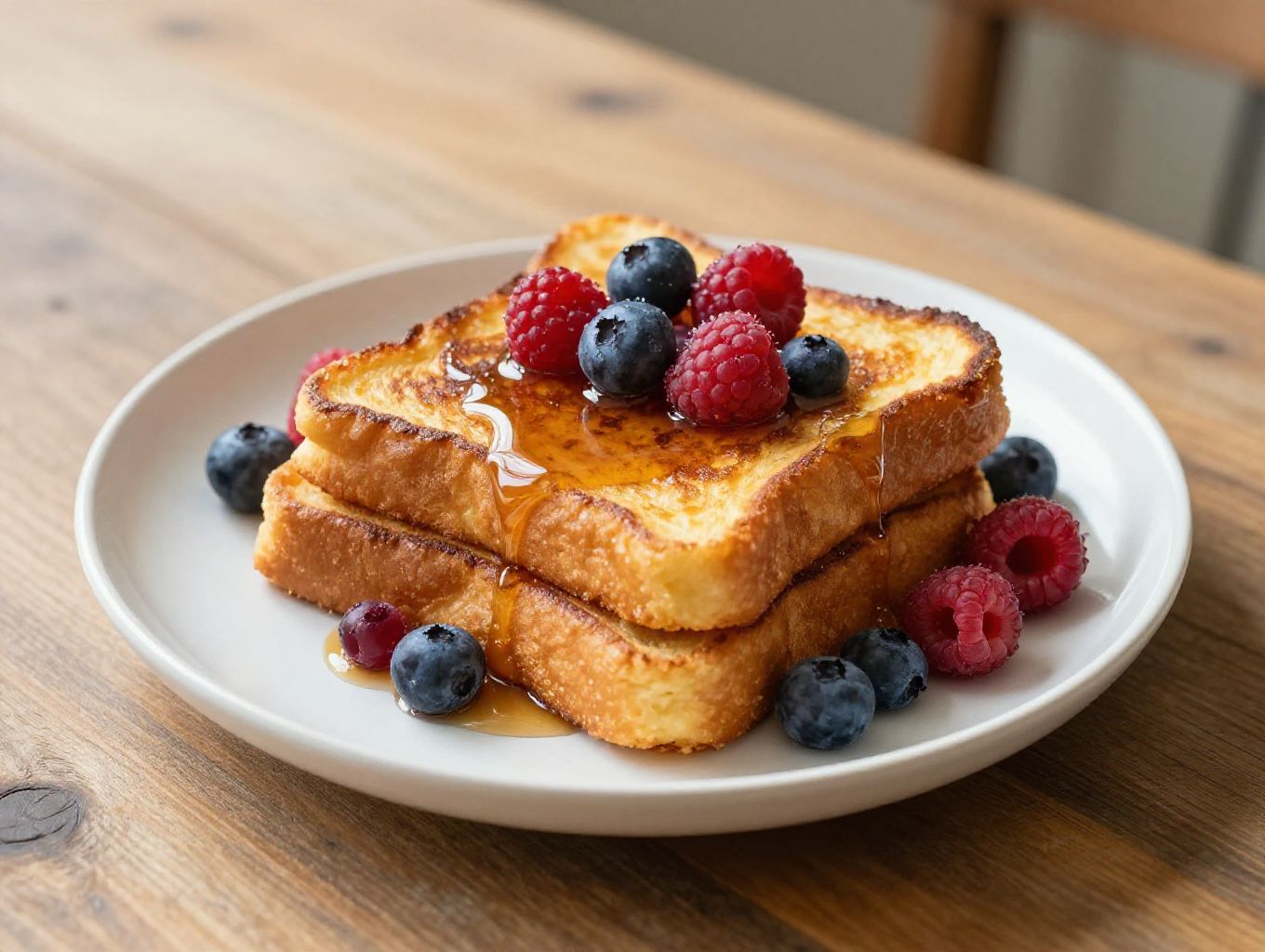
Remove the toast from the skillet and serve immediately. Top with fresh berries, sliced bananas, or a drizzle of extra maple syrup for added sweetness.
Cooking Tips & Tricks
- Use a non‑stick skillet to reduce the amount of oil needed.
- Press the soaked bread gently with a spatula to help it adhere to the pan.
- If the batter thickens, add a splash of almond milk to maintain a fluid consistency.
- For an extra crisp, finish the toast under a broiler for 30 seconds after pan‑cooking.
- Batch‑cook a few slices and keep them warm in a low oven (150°F) for a larger family.
Nutritional Information
Per serving (1 slice):
- Calories: 122
- Carbohydrates: 11.87 g
- Protein: 6.48 g
- Fat: 5.56 g
- Saturated Fat: 1.22 g
- Trans Fat: 0 g
- Cholesterol: 0 mg
- Sodium: 66 mg
- Sugar: 5.73 g
- Unsaturated Fat: 4.34 g
Nutrition Information Source: Nutrition values are calculated per serving using data from USDA FoodData Central, the official U.S. government database for food composition. Values are approximate and may vary based on specific brands and preparation methods.
Nutrition Deep Dive
Each slice supplies roughly 6.5 g of protein, enough to start the day with a solid muscle‑building boost. The carbohydrate count stays under 12 g, and the fiber from whole grain bread supports digestive health.
The fat content is balanced, with more than four grams coming from heart‑healthy unsaturated fats. This makes the dish suitable for a healthy breakfast that won’t spike cholesterol.
If you add berries, you increase antioxidants and vitamin C, which further enhances iron absorption from the eggs.
Healthier Alternatives for the Recipe
- Replace maple syrup with a splash of stevia or monk fruit for a lower‑calorie sweetener.
- Use low‑fat Greek yogurt in the batter to boost protein while reducing fat.
- Swap whole wheat sourdough with oat‑based bread for additional soluble fiber.
- Add ground flaxseed or chia seeds to the batter for omega‑3 fatty acids.
- Include a pinch of nutmeg alongside cinnamon for extra antioxidant benefits.
Flavor Variations
Try a tropical twist by adding shredded coconut and pineapple chunks as toppings. For a nutty profile, drizzle almond butter and sprinkle chopped walnuts.
A savory version can be made by omitting the maple syrup, adding a dash of smoked paprika, and topping with avocado slices and cherry tomatoes.
Seasonal fruit such as sliced peaches in summer or baked apples in fall keep the dish fresh year‑round.
Serving Suggestions
Pair your healthy french toast with a side of Greek yogurt for extra protein. A glass of fresh orange juice or a spinach‑banana smoothie adds vitamins and minerals.
For brunch gatherings, arrange the toast on a platter, sprinkle toasted almonds, and serve with a fruit compote. This presentation looks elegant while staying nutritious.
Common Mistakes to Avoid
- Using too much batter can make the toast soggy; dip each slice only briefly.
- Cooking over high heat burns the exterior before the interior cooks through.
- Skipping the orange zest removes a bright citrus note that balances the sweetness.
- Choosing stale bread reduces absorbency; fresh or lightly toasted bread works best.
- Neglecting to preheat the skillet leads to uneven browning.
Storing Tips for the Recipe
Cool cooked toast on a wire rack before storing to keep the crust crisp. Place slices in an airtight container and refrigerate for up to 3 days.
Reheat in a toaster or skillet for a quick warm breakfast. If you need to freeze, wrap each slice in foil and store for up to 2 months.
Environmental Impact
Choosing whole grain, sprouted bread reduces the need for highly refined flour, which often requires more processing energy. Using almond milk instead of dairy milk cuts greenhouse gas emissions linked to livestock.
Coconut oil is sourced from a renewable tropical crop, and a modest amount keeps the carbon footprint low. By minimizing waste and using reusable cookware, this healthy french toast can be part of a sustainable diet.
Healthy French Toast
Ingredients
Method
- In a mixing bowl, whisk together the eggs, almond milk, maple syrup, coconut oil, vanilla extract, cinnamon, and orange zest until well combined. n2. Preheat a skillet over medium heat and lightly grease it with coconut oil. n3. Dip each slice of bread into the egg mixture, soaking for a few seconds on each side. n4. Cook the soaked bread slices on the skillet for 2-3 minutes on each side, or until golden brown. n5. Remove from the skillet and serve immediately with your choice of toppings, such as fresh berries, sliced bananas, or a drizzle of maple syrup!
Notes
Conclusion
This healthy french toast recipe proves that breakfast can be both satisfying and nutritious. With a short prep time, flexible toppings, and a solid protein boost, it fits any healthy breakfast routine. Try it tomorrow morning, experiment with fruit toppings, and share your favorite variations!
FAQs
- Can I make this recipe dairy‑free? Yes, the recipe already uses almond milk and coconut oil, so it’s naturally dairy‑free.
- How many calories are in one slice? Each slice provides approximately 122 calories, making it a light option for weight‑conscious eaters.
- What protein source does this breakfast offer? The eggs and almond milk deliver about 6.5 g of protein per serving, supporting muscle maintenance.
- Is the recipe suitable for vegans? Replace the eggs with a flax‑egg mixture (1 tbsp ground flaxseed + 3 tbsp water) to make a vegan version.
- How does this compare to traditional French toast nutritionally? It contains less saturated fat, more fiber, and comparable protein, making it a smarter morning choice.
- How much protein does healthy french toast provide compared to other breakfast foods? It offers comparable protein to a typical serving of Greek yogurt, and more than many cereal options. For broader protein advice, see Harvard’s overview of dietary protein.